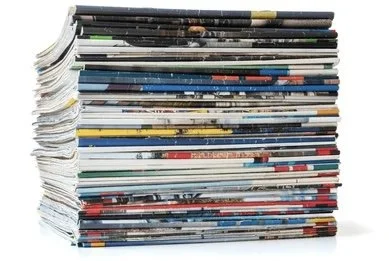
Source Material-
Source material is fuel for the creative engine or a comfortable crib for copying? It’s a question every maker faces — whether you’re a painter, writer, photographer, designer, or musician. You collect books, images, films, playlists, museum visits, screenshots, and sketches. Sometimes those references launch you into something unmistakably yours; sometimes they feel like shackles that lead you back to what you already saw.
Why source material helps
- Orientation and fluency: References teach you the visual language, techniques, patterns, and motifs that make work read clearly to an audience. Studying composition, color palettes, typographic rhythm, or narrative beats accelerates your craft.
- Idea incubation: Exposure increases the chance that disparate elements will combine in novel ways. You don’t invent from nothing; you remix, juxtapose, and recombine—often unconsciously—until something fresh emerges.
- Problem solving: Concrete examples show how others solved technical or conceptual problems. They shorten the path from sketch to finished piece.
- Market awareness: Using familiar elements can make art more accessible and commercially viable. People often buy into what they recognize, which is why familiar styles and motifs sell well.
Why it can hinder
- Echo chamber risk: Overreliance on the same references flattens originality. The more you hang around a single source or style, the more your output converges toward it.
- Confirmation bias: You may only notice or keep paths that match what you already admire, dismissing odd or risky directions that could become signature work.
- False originality: Finding that your “new” idea had already appeared in the first hour of your research is demoralizing — but it’s also evidence you’re thinking inside the same creative box as your influences.
Where “inspiration” ends and “regurgitation” begins
The line is practical rather than metaphysical. Inspiration becomes copying when:
- The core idea, structure, or phrase is reproduced without meaningful change.
- The unique combination of elements that made the original work powerful is essentially duplicated.
- You could swap the creator’s name with yours and the piece would still be recognizably theirs.
How to use source material without losing yourself
- Curate widely and intentionally. Seek references outside your comfort zone — different eras, cultures, and disciplines. Cross-pollination creates distance from any single source.
- Extract principles, not patterns. Ask what you like about a work (tension, contrast, pacing) and reapply that principle with different content.
- Limit exposure when ideating. Set a short, fixed research window, then close the books and sketch from memory. Constraints force invention.
- Practice ‘mash-up’ exercises. Combine a formal rule from one source with subject matter from another. The stranger the pair, the more likely you’ll get something novel.
- Iterate rapidly and quantitatively. Make many small versions and discard obvious echoes. Volume increases the chance of a distinctive outlier.
- Annotate your references. Write one sentence about what to steal (principle) and what not to copy (specific motif). That mental labeling reduces accidental mimicry.
- Embrace influence transparently. If a piece is clearly derivative, credit your sources or present it as a study; treat it as practice, not a finished claim of uniqueness.
Ethics and legality
Being inspired is legitimate; copying another artist’s protected expression is not. Copyright law protects specific expressions (images, text, melodies), not ideas or styles. When in doubt, transform: change purpose, context, medium, or composition enough that the new work stands apart and contributes something new.
The creative economy paradox
You’re right that familiarity sells. The goal isn’t to reject the market’s appetite for the known but to find a balance: use familiar cues as entry points while layering original voice, perspective, or concept that gives people a reason to choose your work over the rest.
Conclusion
Source material is neither inherently helpful nor harmful. It’s a tool. In disciplined hands, it’s practice, scaffolding, and launchpad. In unexamined hands, it becomes a template and a trap. The practical move is to treat references as raw material to be processed — filtered, combined, and transformed — until what remains is unmistakably yours.
Short exercise routine to break dependence on familiar references
Warm-up (5–10 min each session)
- Blind sketching: 2 minutes each, 6 quick continuous-line drawings of random objects without looking at the page. Focus on motion and gesture, not accuracy.
- Memory redraw: Study a simple image for 30–60 seconds, hide it, then redraw from memory. Do 3 rounds.
Daily creativity blocks (30–60 min)
- Constraint prompt (15–20 min): Pick a strict constraint (limited palette, one shape, a single verb like “fold”) and make 3 small variations. Constraints force novel solutions.
- Cross-pollination mash-up (20–30 min): Combine two unrelated inputs (e.g., Renaissance portrait + subway map; botanical illustration + cyberpunk). Produce 2 pieces mixing those rules.
Weekly deeper work (2–3× per week, 60–120 min)
- Reverse engineering then overturning: Pick a favorite work, list 5 underlying principles (composition, lighting, mood). Recreate using those principles but change subject, era, and medium. Aim for one finished piece.
- 50/10 iteration: Make 50 tiny thumbnails (1–2 minutes each) for an idea, rest 10 minutes, then pick the best 5 to develop further. Quantity kills obvious repeats.
Monthly resets
- Source blackout day: No reference material for a full day. Produce anything — poem, sketch, color study — relying only on memory and impulse.
- Outside-discipline project: Do one project in a medium you rarely use (collage, ceramics, choreography, songwriting). Translate the result back into your primary medium.
Ongoing habits
- Reference log (5 min): For every reference you use, jot one sentence: “What principle I’ll steal” and “What I must avoid copying.” Builds awareness.
- Random input feed: Once a week, pick a random image/word from a book or website and force it into a current project for an unexpected twist.
Session structure example (60 minutes)
- 10 min warm-up (blind + memory)
- 25 min main exercise (constraint or mash-up)
- 15 min iterate/refine
- 10 min quick reflection & log
Goals & metrics
- Aim for volume over perfection: schedule at least 4 short sessions/week.
- Track novelty: after each piece, note whether it feels derivative (yes/no) and why. Over time you’ll see progress.