Do you use your art supplies — or do you just hoard them?
I’ve been drawing and painting since the late seventies, which means I’ve watched brands come and go, trends arrive and fade, and my own tastes shift with every sketchbook. Somehow, some of the supplies I bought in the early eighties are still with me. Why? Part of it is sentimental: those pens and tubes carry memories of experiments, failed pieces that taught me more than polished works ever did, and the rush of first trying a new medium. Part of it is practical — there’s comfort in knowing you have exactly the color or texture you want when inspiration strikes. But I also have to ask: am I saving tools to use, or saving them from ever being used up?
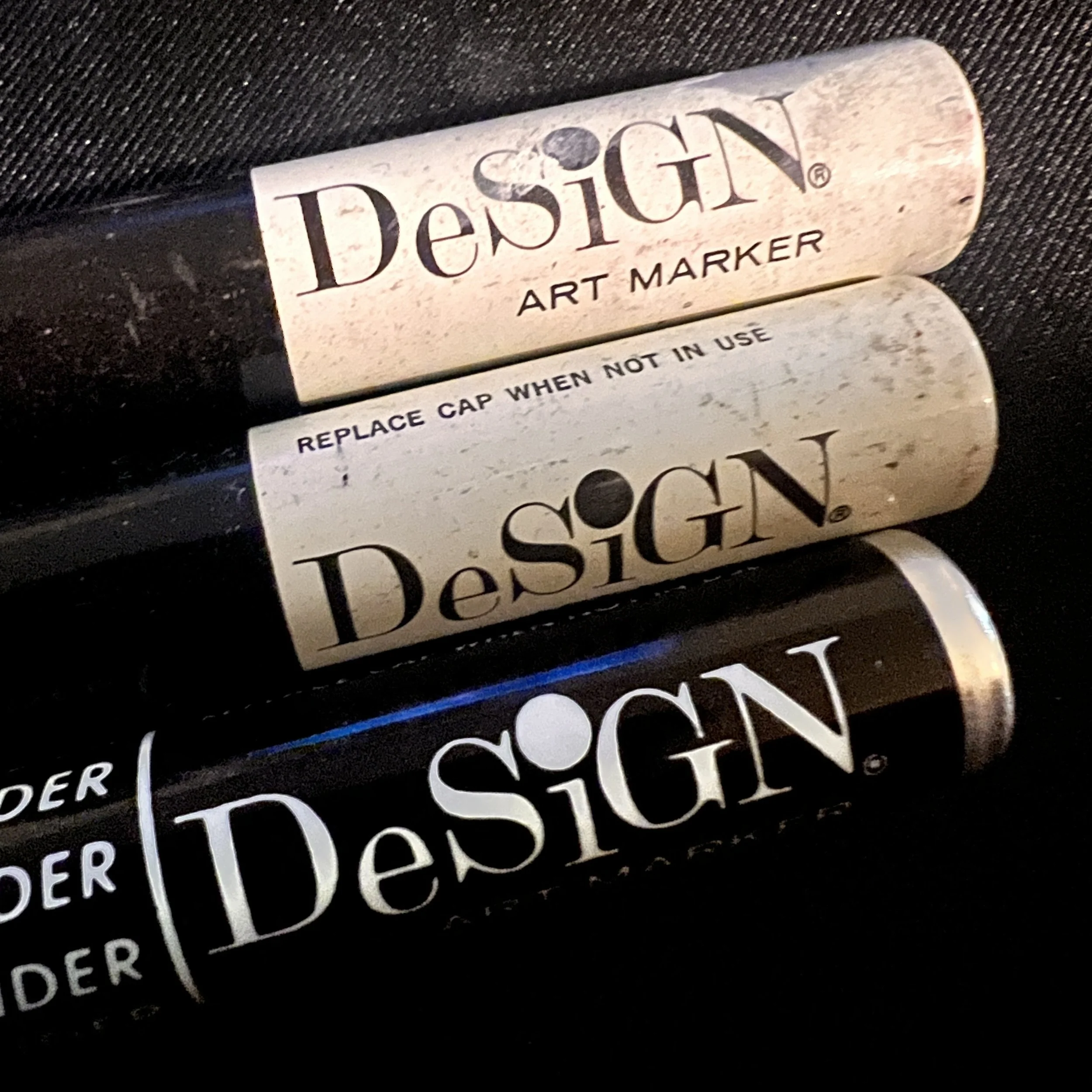
There’s another, stranger reason collectors among us understand: fear. The worry that the marker, paint, or pen you love will vanish overnight. I learned that the hard way. I adored Faber Design Markers — the feel, the color, the way they behaved on paper — and then in 1992 they disappeared from shops. Production stopped because of health concerns over xylene fumes, and suddenly a little part of my toolkit was gone. Years later, the remaining sets pop up on eBay for small fortunes. I was lucky: I still have a few that I use sparingly, like relics that occasionally step back into service. That scarcity made me question my habits. Was holding onto them smart foresight or just fear-driven hoarding?
There are clear downsides to stockpiling. Supplies degrade — dried paints, brittle brushes, markers that bleed out — and many materials have a usable life. Hoarding also keeps you from exploring: if you always reach for the same “perfect” pen, you miss opportunities to discover new effects from something different. On the other hand, having a curated stash can be freeing: no panicked runs to the store, no interruptions when you’re in the flow. The trick is balance.
Here’s a simple approach I’ve found useful: use first, save what’s irreplaceable, and rotate. Use the supplies you have every day so they continue to inform your practice. Keep a small, carefully chosen reserve of items that are genuinely hard to replace — not just everything that’s older than you are. When something becomes truly special (like my Faber markers), treat it as both tool and artifact: test it, let it sing on a finished piece now and then, but don’t exile it to a drawer forever. Also, document what you keep: a photo and a short note about why it’s valuable can help you decide later if it’s worth preserving.
So again: do you use your supplies or stock them? There’s no single right answer. If your stash fuels your work and happiness, keep it. If it gathers dust and guilt, consider a purge or a rotation plan. Use what you love, preserve what you must, and don’t let fear decide for you.